Review
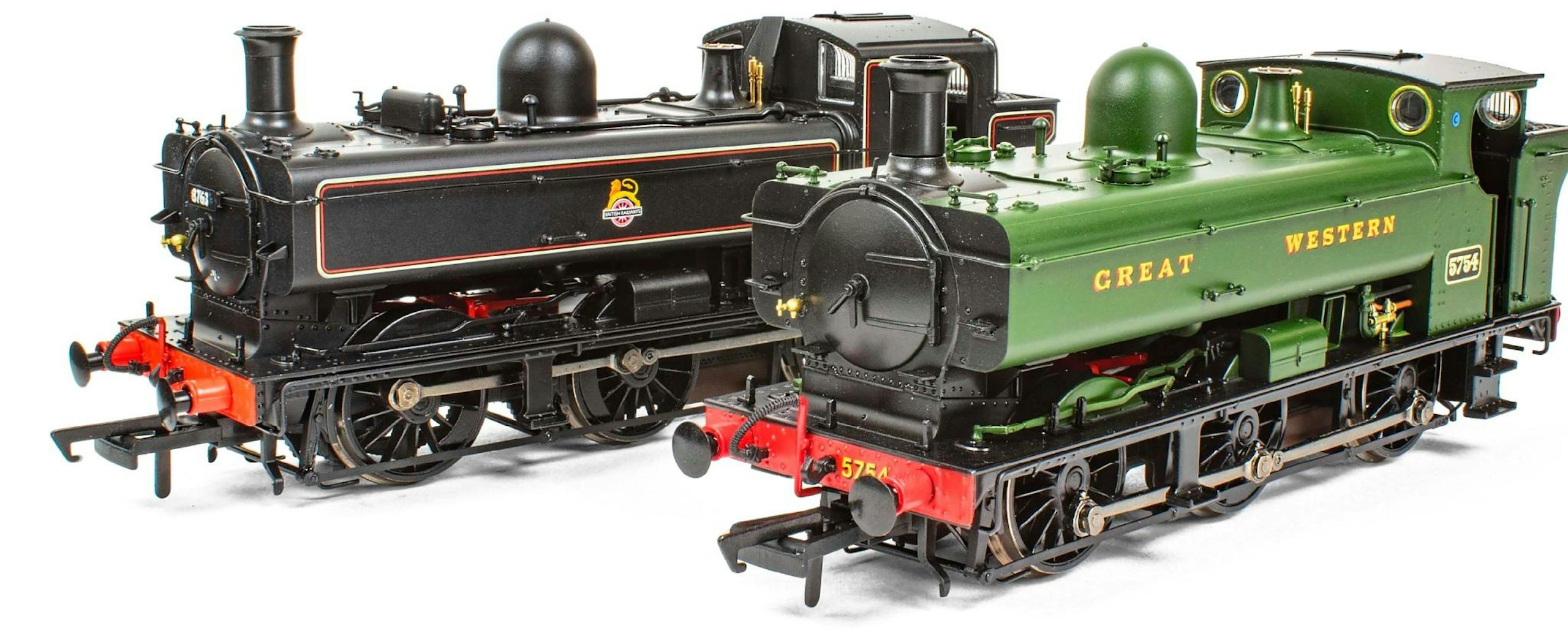
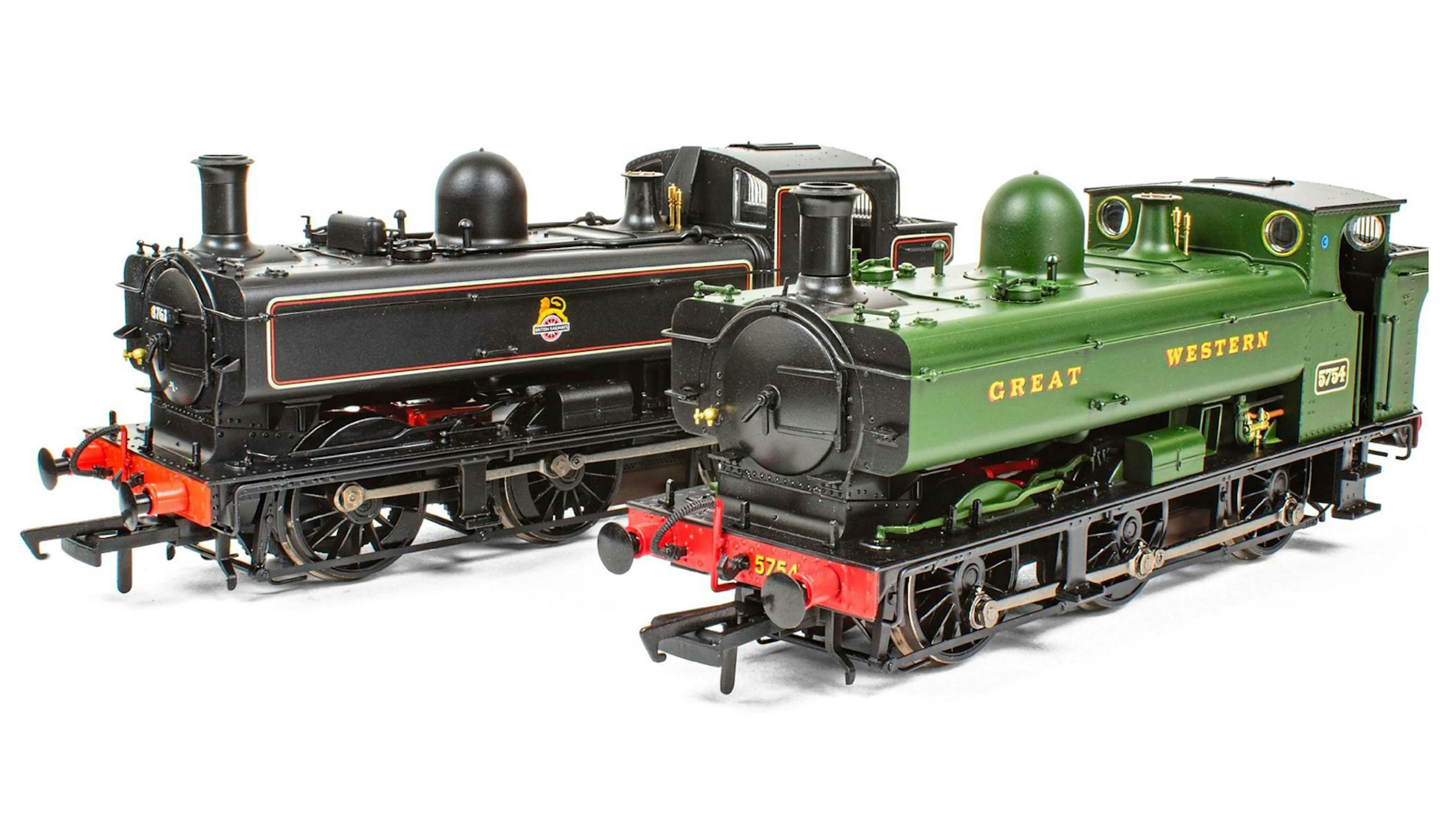
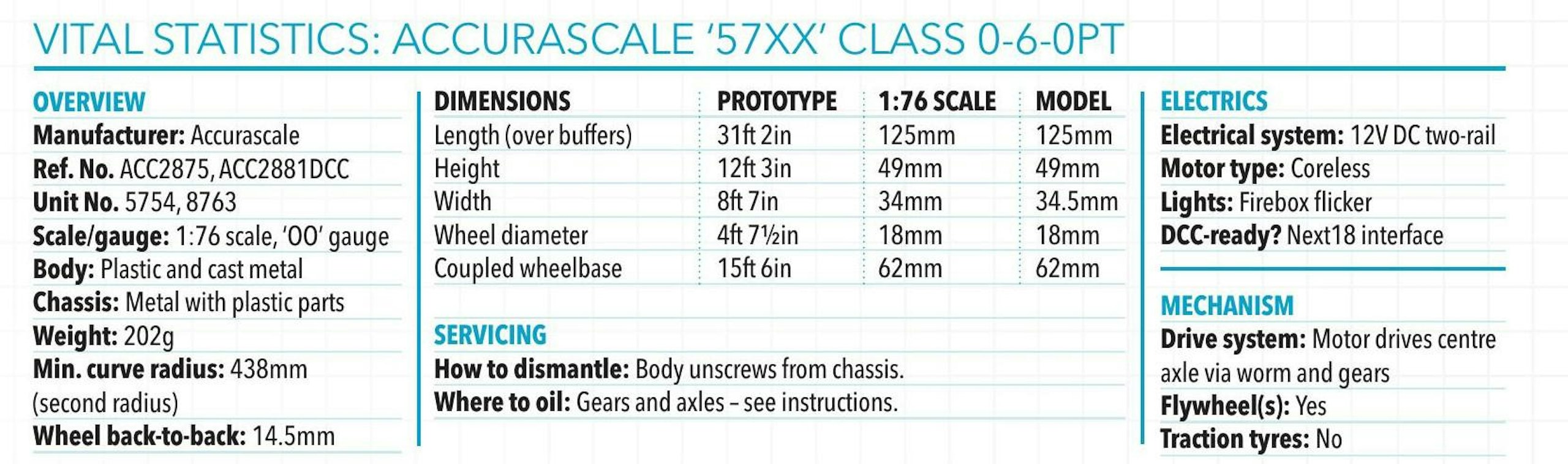
◆ GAUGE ‘OO’ ◆ MODELS Accurascale • GWR ‘57XX’ class 060PT No. 5754 GWR green • ‘8750’ class No. 8763 BR lined black ◆ PRICES £139.99 (DCC-ready), £239.99 (DCC sound) ◆ AVAILABILITY Accurascale stockists • Web www.accurascale.com
There’s no doubt that for each of us, some models are simply a ‘must have.’ For me that is certainly true of the Accurascale ‘8750’ class pannier tank. I grew up with GWR pannier tanks, although in my day this would simply have been known as a ‘57XX’. A Gaiety ‘57XX’ was the first GWR locomotive model I bought as a teenager (see page 122).
Subsequently, I upgraded to a Bachmann model, but that must be more than 40 years ago. So the time was certainly ripe for a 21st Century take on Collett’s ubiquitous pannier tank class. Fortunately, Accurascale has stepped up to the plate with a suite of 060Ts, encompassing the ‘57XX’, ‘67XX’ and ‘8750’ classes, a project announced back in 2023.
There are several hundred potential subjects among this cadre; 203 in the ‘8750’ form in particular, providing Accurascale with numerous detail and livery variations. Indeed, there’s an eye-watering choice of 11 models in this first run, across GWR, BR, and London Transport liveries. There’s also a National Coal Board green ‘57XX’.
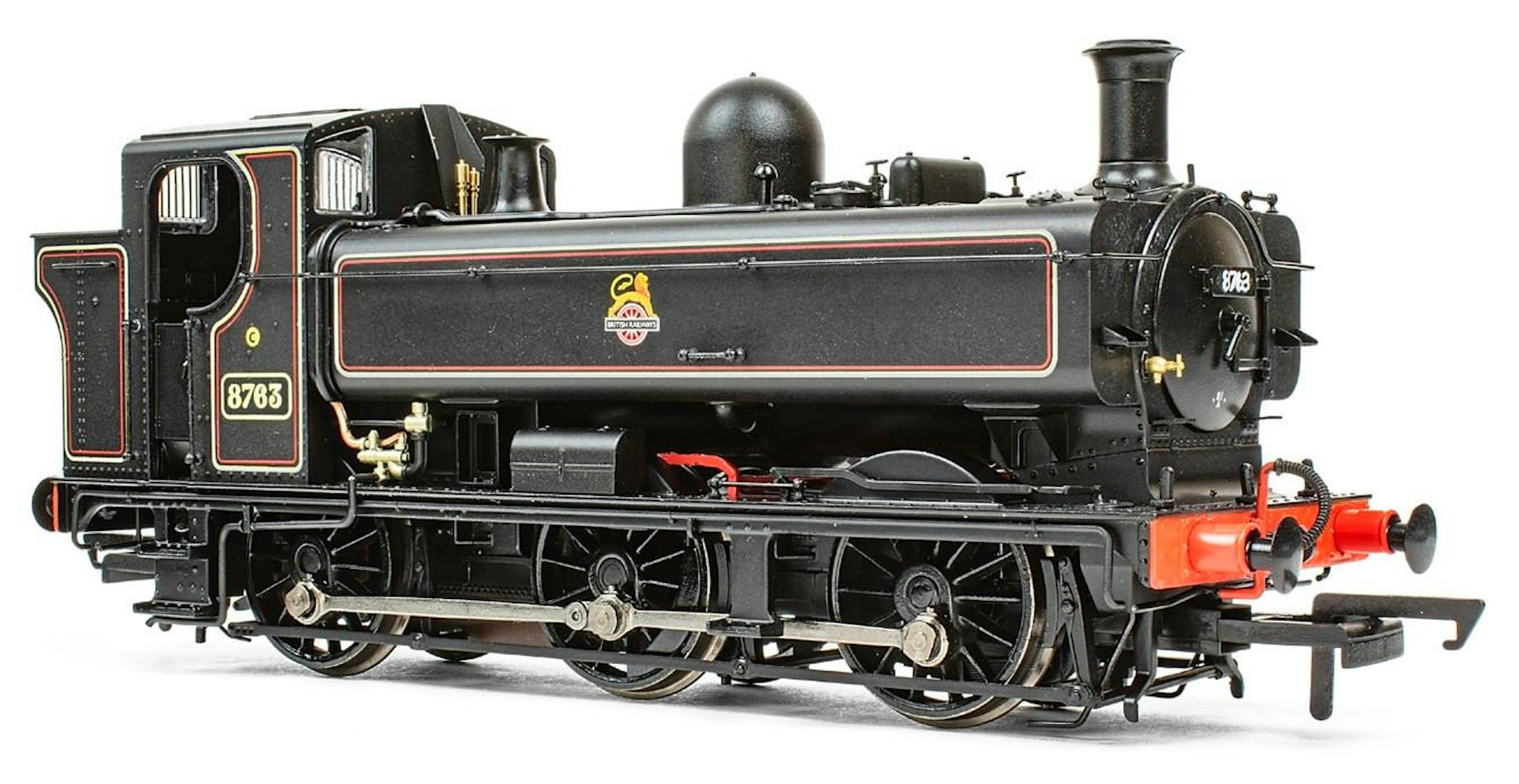
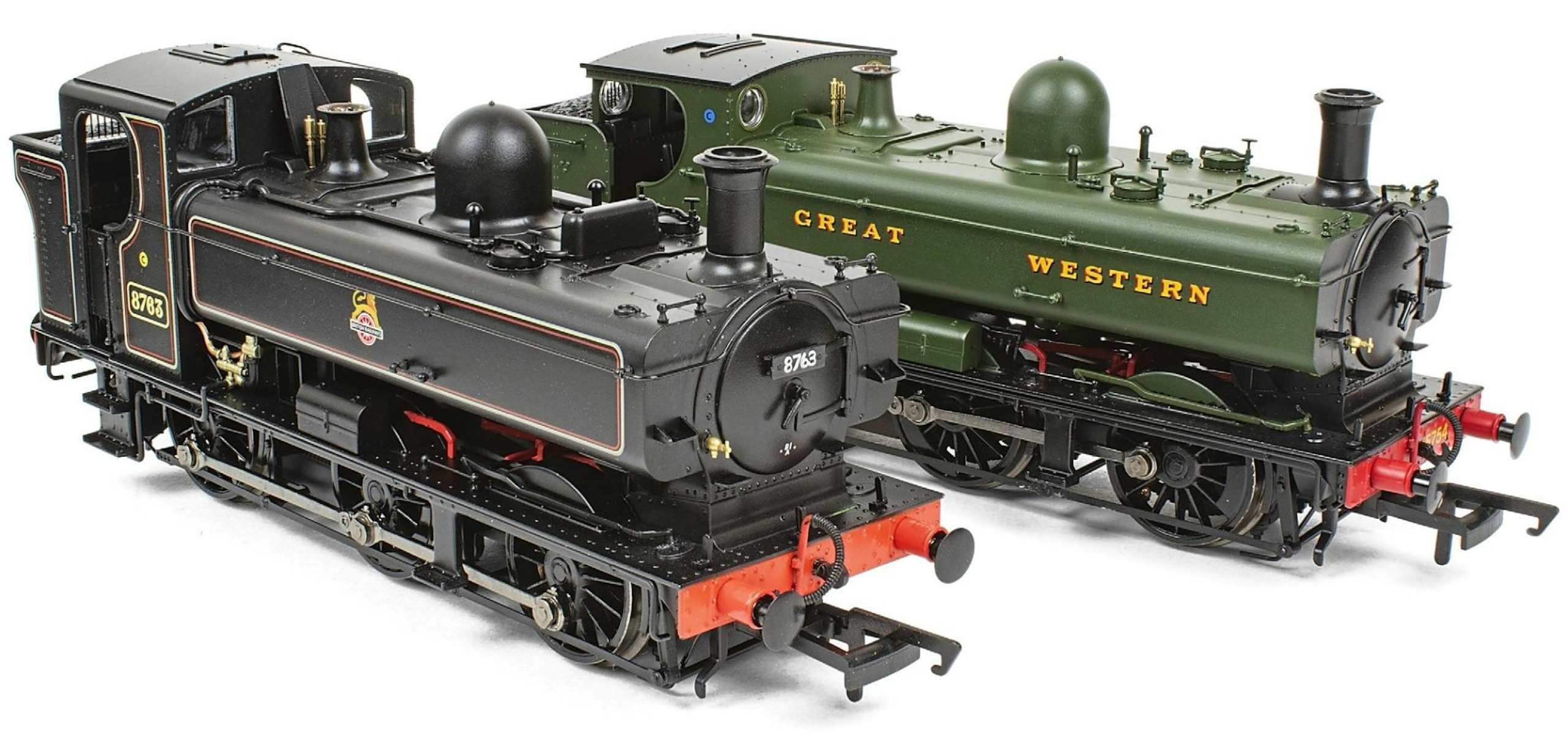
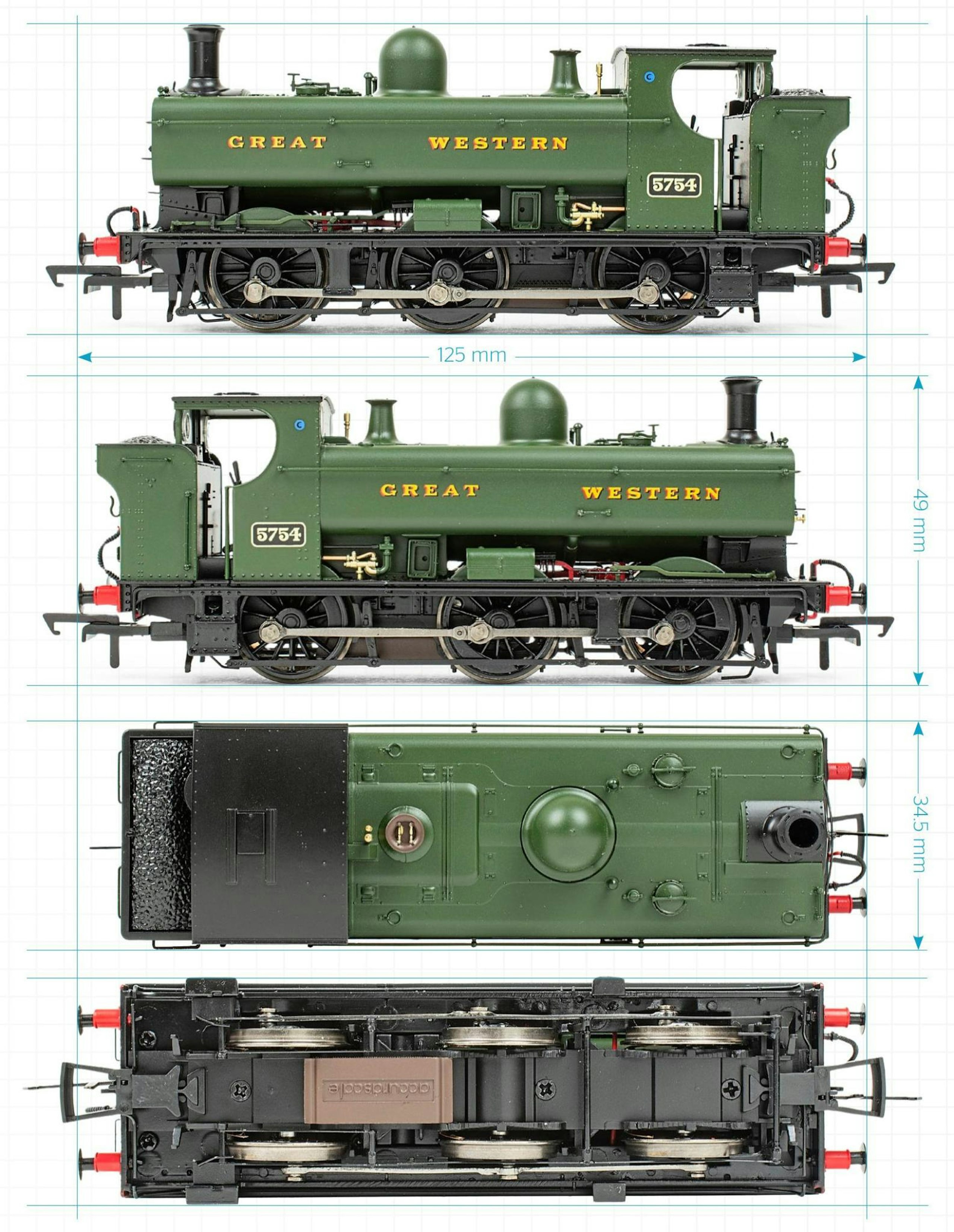
Model Rail received a pair for review (illustrated here), namely ‘57XX’ No. 5754 in GWR green and ‘8750’ No. 8763 in lined BR black. For my own collection, I settled on No. 9741 in GWR green but with British Railways lettering on the tank sides.
Accurascale tells us that 9741 was built in 1935 and worked from Wolverhampton Stafford Road, ending its days at Wellington, from where, no doubt, it would have worked the Much Wenlock branch, which is a a particular favourite railway location of mine.
No. 8763 was an Old Oak Common-based 060PT for its entire life, treated to lined BR livery due to its regular use as a station pilot at Paddington, while 5754 was also allocated to Old Oak Common during the GWR years.
“There’s a lifetime between these and my old Gaiety model, and it really does demonstrate how ready-to-run has progressed in that time”
FIRST IMPRESSIONS
As usual with this manufacturer, the packaging is, in my view, somewhat excessive, featuring a locomotive in a clamshell ‘ice box’ surrounded by extensive foam cushioning inside a substantial, lidded cardboard box. The box is protected by a clear plastic sleeve. Nice, generous, and no doubt necessary to protect the model, but incredibly greedy on shelf space, which, for this modeller, is at a premium.
Included in the box is an instruction sheet, a booklet about the prototype locomotives, and a card warning about the A incompatibility of ancient analogue controllers and modern can motors. There is a small bag of tiny detail parts, including headlamps (non-working) and a pair of optional etched brass numberplates. There is also a pair of special tweezers designed to extract and install DCC decoders via the magnetic smokebox door. More on this later…
The overwhelming first impression of the models is that they are stunning. There’s a lifetime between these and my old Gaiety model, and it really does demonstrate how ready-to-run has progressed in that time.
Immediately obvious are the full-width splashers and the ‘daylight’ under the boiler and tanks, with the carefully modelled (but non-working) inside motion picked out in red, as was Swindon practice. Other separately fitted parts include the injector pipework ahead of the cab and some very fine reversing rods and sanding linkages. And that’s all just under the boiler and tanks.
On top, the detail is equally crisp and accurate. The chimney, dome and green-painted safety valve bonnet are all crisp and accurately shaped, while there are separate tank fillers, tank vents and a pair of brassed whistles. Whistle shields are included where the prototype demands it, as seen on BR black No. 8763.
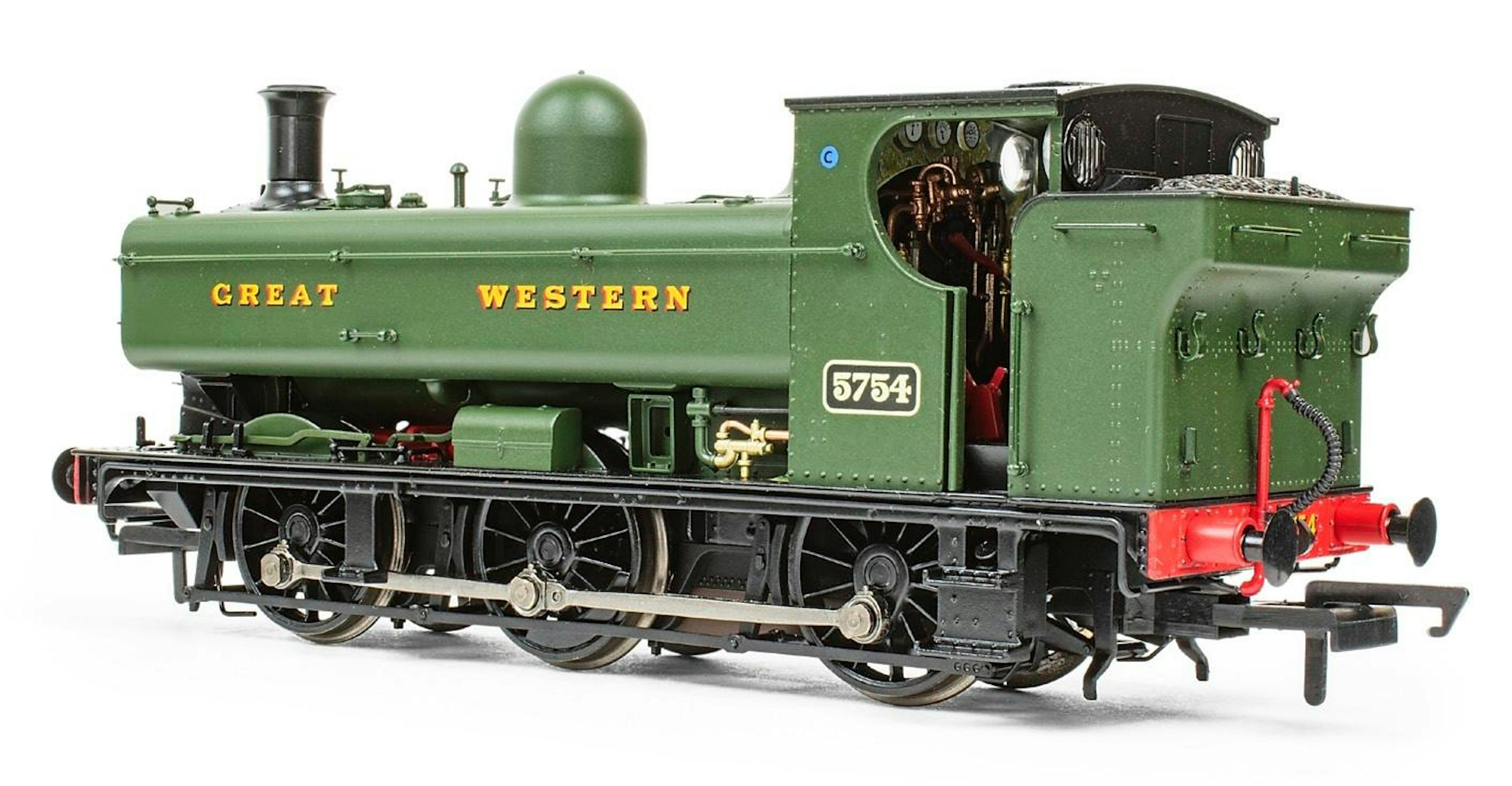
The cab has a fully detailed interior, and the large side openings reveal the need for a suitable crew. The bunker back carries separate fire-iron hooks and lamp irons, and lightly sprung black metal buffers are fitted all round.
Of the samples under review, No. 9741 was an example with no top-feed, the later style cab, bunker-side steps, and the injector overflow routed through the running plate. GWR No. 5754 also lacks a top feed apparatus but sports an early cab without bunker access steps. In contrast, BR No. 8763 boasts the later, taller cab with enlarged spectacle plates and side steps, revised handrails, backwards-sliding roof vent, top feed with accompanying water pipes and injector pipe passing over the edge of the footplate.
The attention to detail on each version is impressive, with the characteristic profile of the upper chimney rim captured well. The cast metal coupling rods look great, with a convincing representation of the oil points atop the crank pins and authentic-looking crankpin bolt heads – although it looks like a special tool may be required to remove them.
My only disappointment is the unconvincing coal load in the bunker, which is filled almost to the top, so adding any real coal on top will make for a very full bunker. Additionally, the printed cabside numberplates are OK, but adding the supplied etched versions offers a drastic improvement. Ditto the smokebox numberplate on the BR black version. Various extra details are supplied, although the screw-link couplings proved uncommonly fiddly to install.
My eye keeps being drawn to the tap to the left of the smokebox door, which was used to supply steam and water when cleaning the smokebox. It is a tiny, separately fitted plastic item with a lifelike brass finish, but it sums up the attention to detail on this model. Equally fine, on the opposite end of the model, are the protective bars over the rear spectacle windows to prevent over-zealous coaling from breaking the glass.
3 things we like
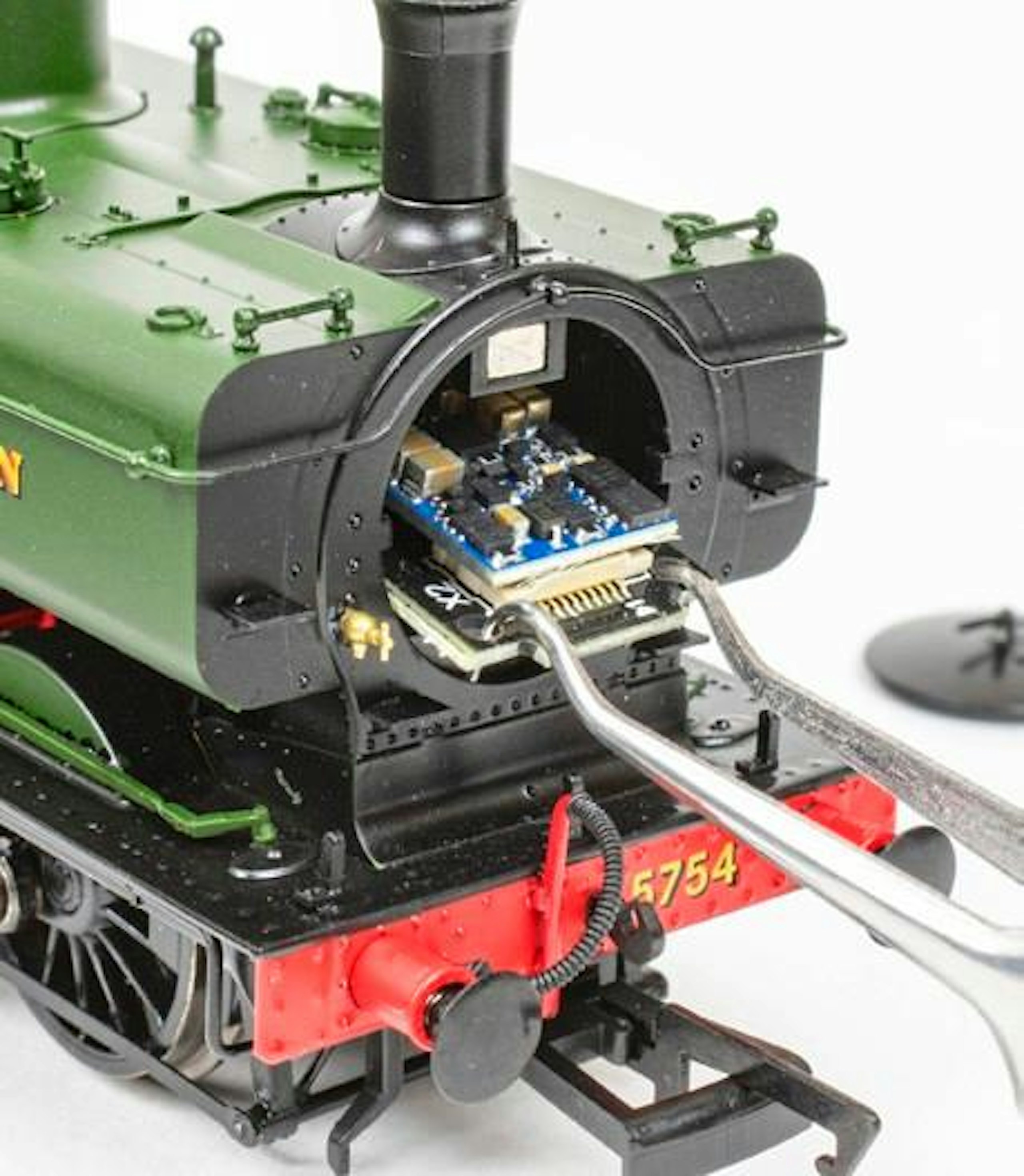
1. Easy to remove Next18 DCC interface – although re-fitting it is not quite so simple!
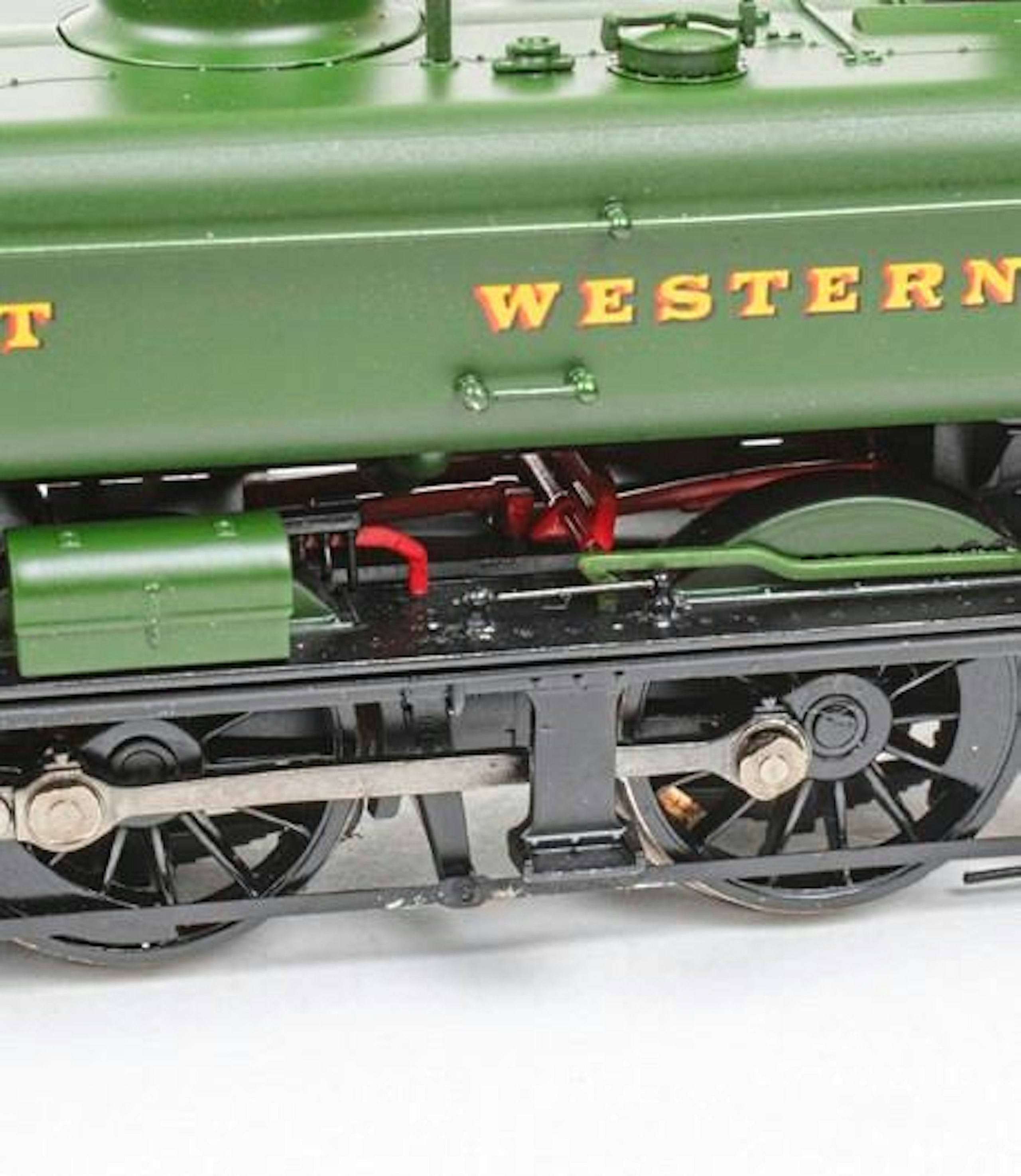
2. Attention to detail, including cosmetic inside valve gear.
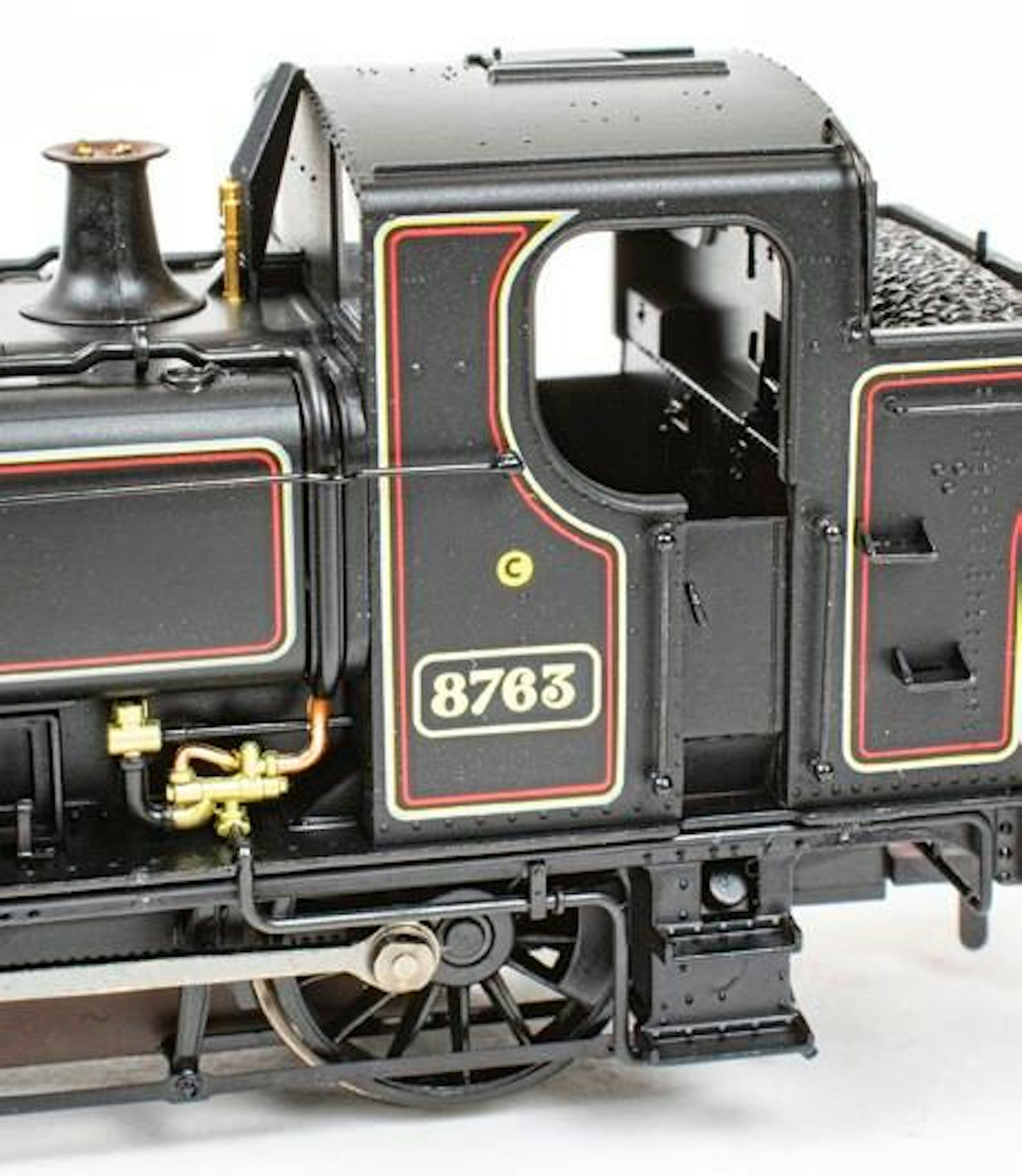
3. Superb paint finish, including lining and printing.
PERFORMANCE
The flywheel-fitted motor sits in the centre of the locomotive and power is directed to the middle axle via a worm and three precision gears. A Next18 decoder socket can be accessed via the magnetic smokebox door, with the supplied tweezers making removal of the interface simple.
Re-fitting it is not so easy; the location of the 12-pin socket is obscured, and no guide rails are provided, as per similar arrangements on other manufacturers’ models. It’s a small, simple feature that would greatly ease the process, so hopefully it will be added to any future production batches.
DCC sound-fitted models are available of all 11 versions, each featuring a twin-speaker sound set-up along with ‘stay alive’ circuitry.
On test, one of the locomotives was a little hesitant at first, but quickly settled down. Despite having the knuckle joint in the coupling rods neatly represented, the rods are not articulated. Though there is some side-play in all three axles, the rods do limit any flexibility that there might have been and accordingly, the model is intolerant of track defects.
Apart from that, all of our samples proved to be very sweet runners – and powerful too. My test train of three bogie coaches, 15 four-wheel wagons and a ‘Queen Mary’ brake van was handled with ease.
George Dent tested the DCC sound-equipped version, reporting an excellent package, aided by the twin ‘sugar cube’ speakers, and with a range of authentic running and optional incidental noises, including coal being shovelled, the tanks being filled with water and various shunting and coupling effects.
CONCLUSIONS
Everything on this model is just captivating. Looks and performance are top-notch; the character is well captured and the paint and print finish is faultless. Bravo!
(CJL)
FACTFILE: GWR ‘57XX’ 060PT
The ‘57XX’ 060PTs were introduced in 1929 by C.B. Collett as a modern replacement for the ‘2721’ class, which had been converted from earlier saddle tanks. By this time, the GWR had settled upon the pannier tank arrangement and Belpaire boiler as being the ideal for an easy-to-maintain, ‘go anywhere’ locomotive. The new design had an enclosed cab as the most obvious development from its half-cab predecessors.
Of the first order for 100 locomotives, 50 were built by North British in Glasgow and 50 by the GWR atSwindon. Almost immediately, a further 200 were ordered, paid for by the Government as part of a work creation scheme. There were six contractors; NBL, Bagnall, Beyer Peacock, Kerr Stuart, Armstrong Whitworth and Yorkshire Engine Co. Fifty locomotives numbered in the 6700 series were without steam heat, vacuum brake or ATC, being reserved for yard shunting and short trip work. They had three-link couplings.
From 1933, the ‘57XX’ design was further modified, the most obvious feature being a much-improved cab on locomotives numbered from 8750 onwards. Nearly 500 were built, the last examples being post-nationalisation in 1948.
A final variant was the ten examples in the ‘97XX’ series built with a condensing apparatus for working over the Metropolitan widened lines to Smithfield market. The pannier tanks were shortened to clear the condensing apparatus, and the consequent reduced water capacity was made up by extending the tanks downwards ahead of the cab.
Between 1956 and 1963, the following locomotives were sold to London Transport for use on maintenance trains, 5752/57/64/75/86 and 7711/15/39/41/49/52/60/79. Sixteen members of the class have been preserved.
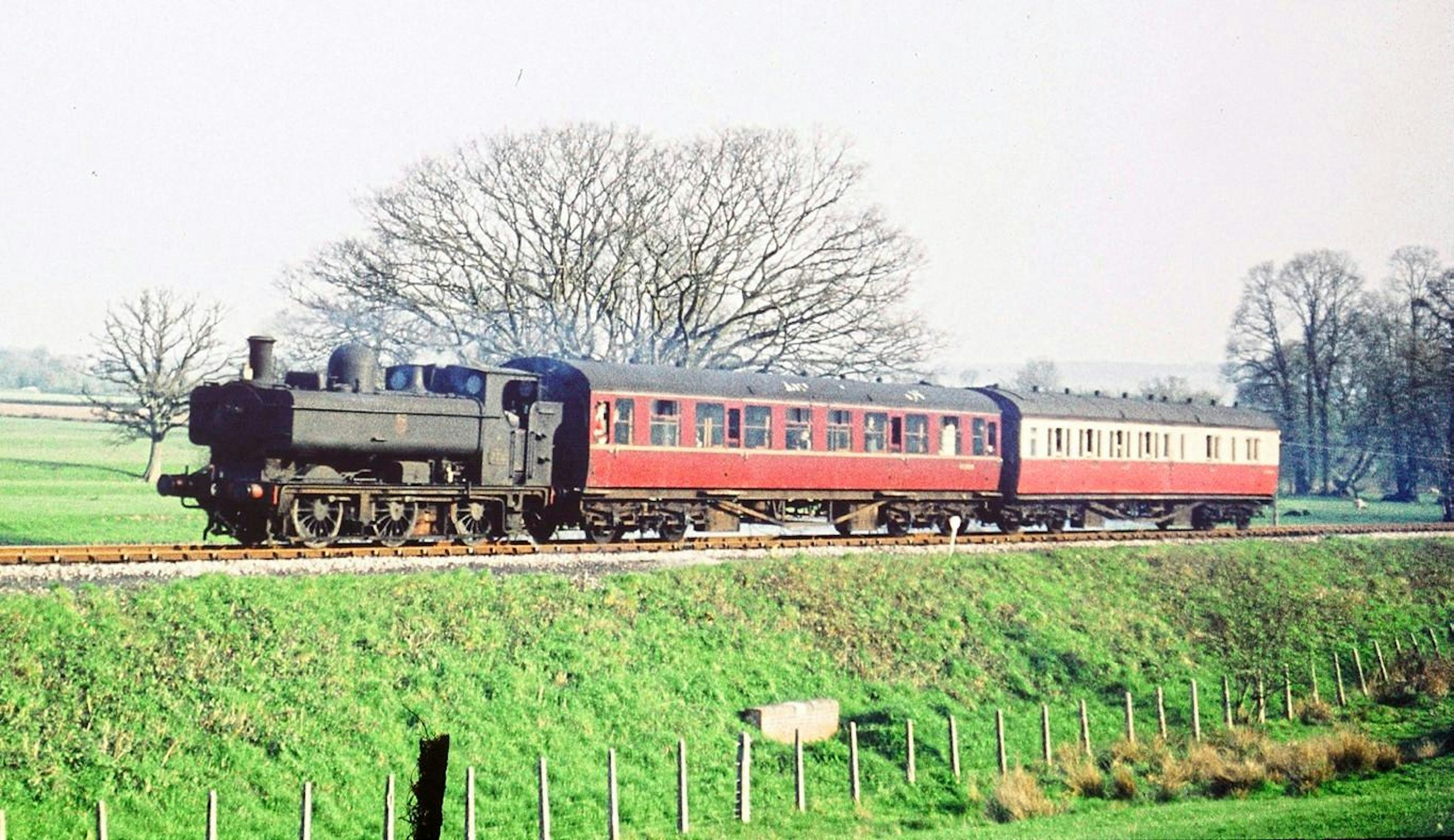
1: Ex-GWR ‘57XX’ No. 7761 trundles along with an Exe Valley branch line train at Thorveton, in April 1960. COLOUR RAIL
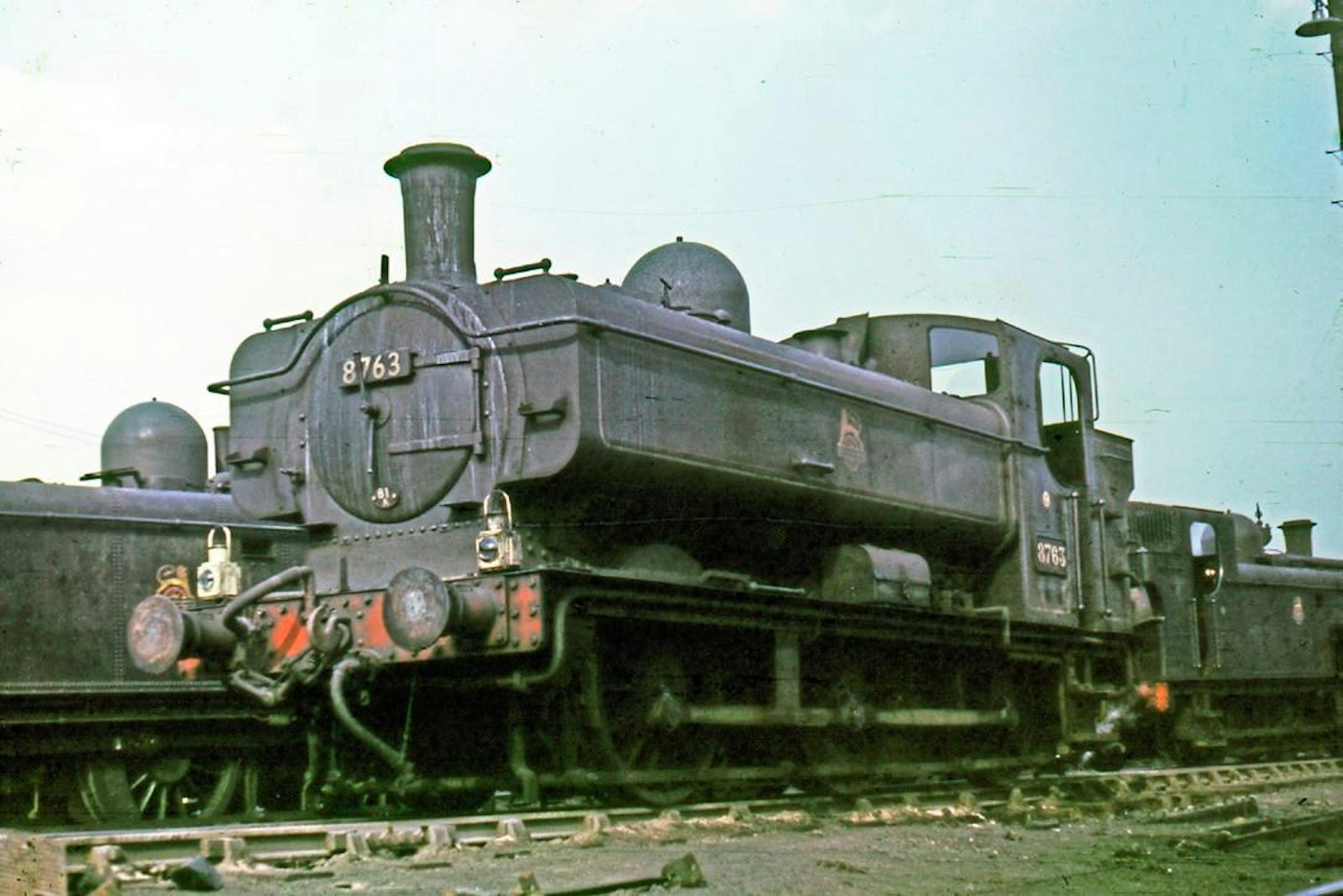
2: Old Oak Common’s No. 8763, with its lined black livery just visible under the grime, rests at its home shed in the early 1960s. COLOUR RAIL
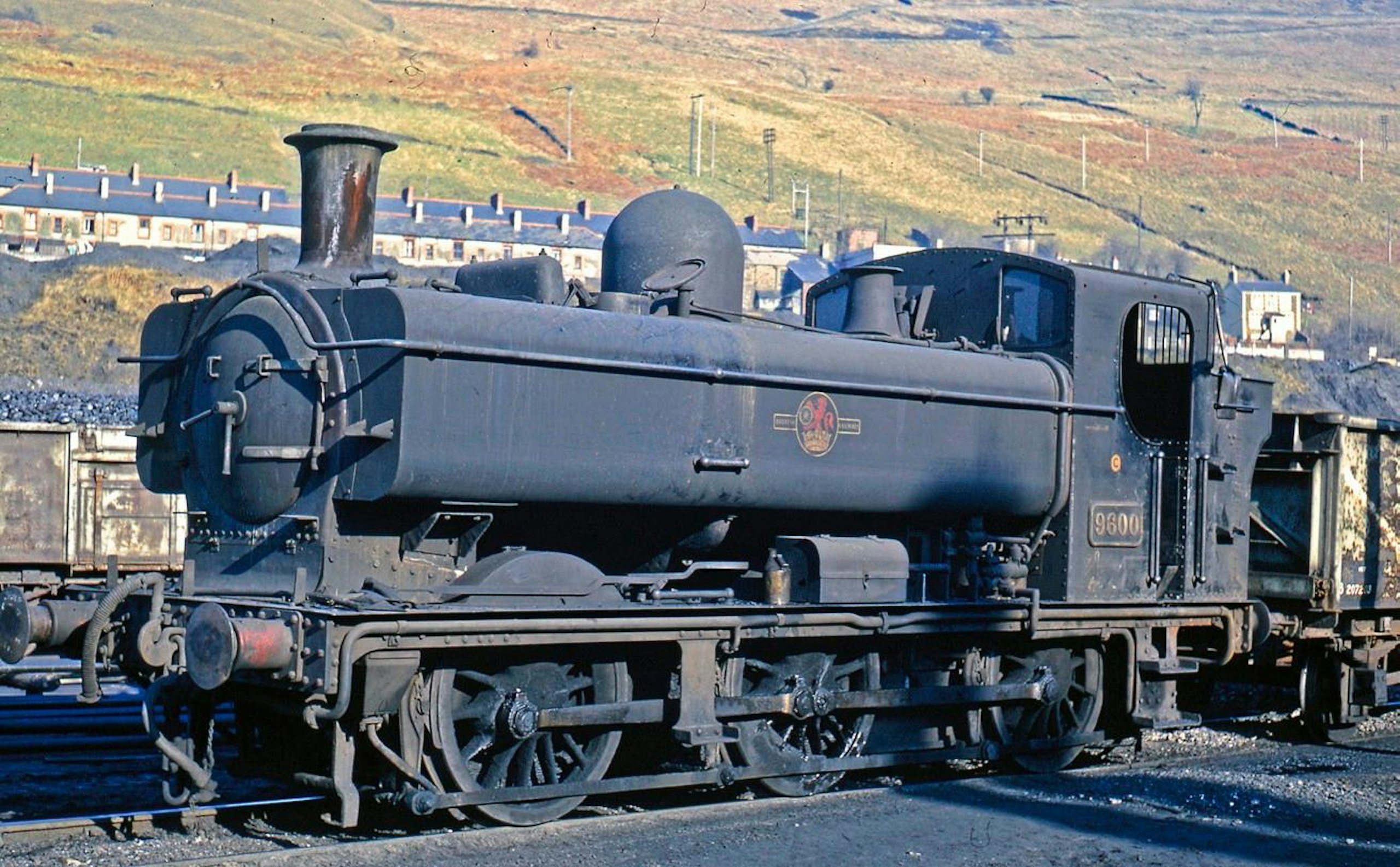
3: Built at Swindon in 1945, and representing the final development of Collett’s design, No. 9600 is seen at Merthyr Vale in 1966, a year after being acquired by the NCB. The 060PT was subsequently saved for preservation and is based at Tyseley. COLOUR RAIL
SUMMARY
PROS
• Accuracy.
• Good looks.
• Superb finish.
• Performance.
CONS
• Very little.
FINAL VERDICT
A little beauty.
Subscribe to a Model Rail Print+ Subscription today and you'll get instant digital access, PLUS FREE UK delivery so you will never miss an issue.