Review

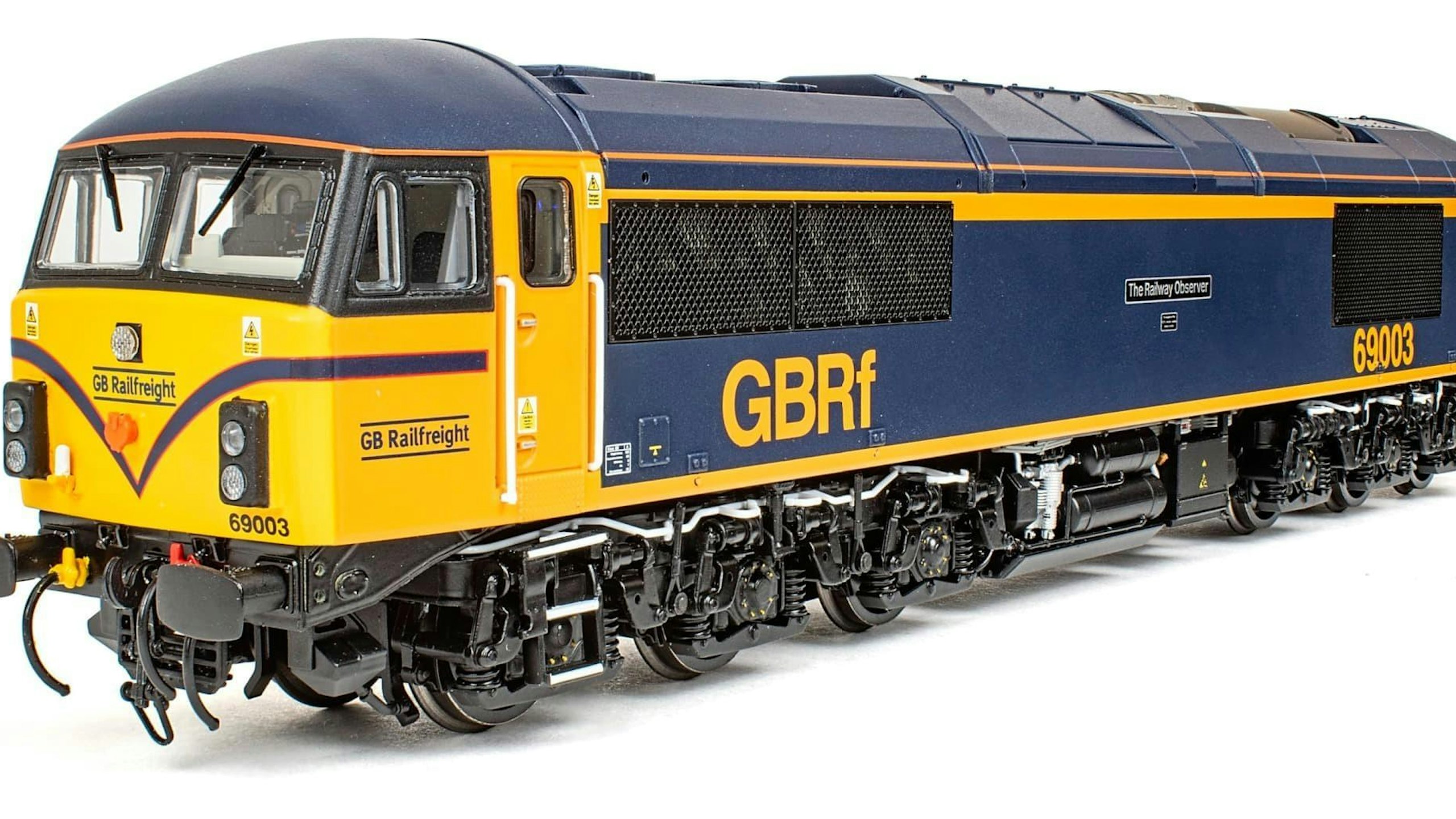
◆ GAUGE ‘OO’ ◆ MODEL Bachmann 35-778 Class 69 69003 The Railway Observer, GBRf blue ◆ PRICE £249.95-£389.95 ◆ AVAILABILITY Bachmann stockists Web www.bachmann.co.uk
The railway has always been adept at re-purposing locomotives and rolling stock, and, as shown by GB Railfreight over the past few years, it’s a practice that survives in the current era. Thwarted in its mission to expand its Class 66 fleet, the freight operator turned instead to a spot of recycling.
Taking a motley collection of British Rail Class 56s, some of which were nearly 50 years old, they were stripped back to bare bodyshells and re-equipped with General Motors diesel engines, plus new electrical, control and cooling gear, creating a virtually new fleet of powerful locomotives – the Class 69.
First announced in 2021, just as the first prototype took to the rails, Bachmann’s models have now arrived, not long after the 16th – and final – locomotive was completed. Produced with full co-operation of GB Railfreight, Bachmann’s Class 69s have been hotly anticipated by modellers of the current scene.
Some attractive livery options are available in this initial batch, including a few of the retro-style BR schemes, but our sample is one of the more sober versions, depicting 69003 The Railway Observer (formerly 56018), in GBRf’s house colours.
As is now the norm for Bachmann ‘OO’ modern image locomotives, all versions are available in DCC-ready, DCC sound-fitted and DCC sound deluxe format, the latter featuring Bachmann’s auto-release tension lock couplings. Those with digital sound are equipped with Bachmann’s new twin speaker arrangement for improved audio performance, and a ‘Bach-up’ stay-alive circuit is pre-fitted to all versions, with an isolating slide switch located below the chassis. While this feature is a boon for digital users, it also has its uses on analogue layouts, although the model may no longer stop as expected in DC mode, so it’s something analogue users ought to use with care.
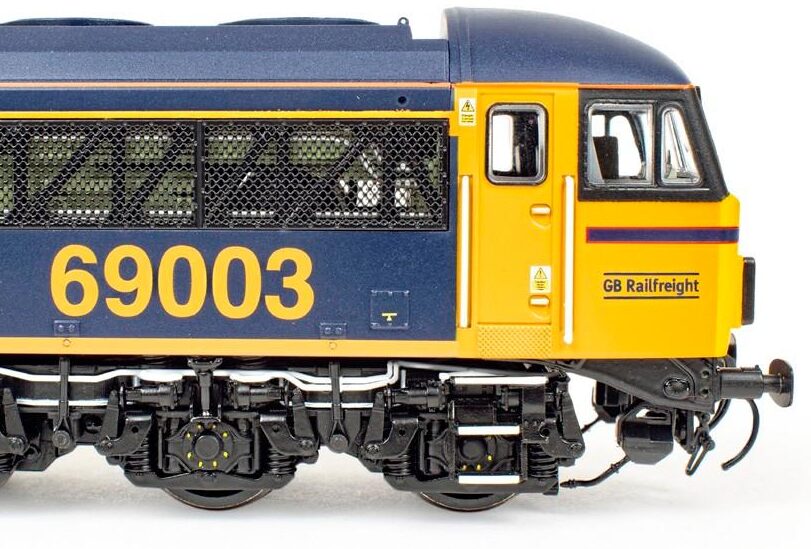
“The underframe is a real treat for the eyes, with the unique Class 56 bogies expertly captured”
GOT THE LOOK
Presented in Bachmann’s usual plastic clamshell and card packaging, the ‘69’ is highly impressive when first unpacked. At nearly 650g, it’s a weighty beast and, like the real thing, there’s enough of the original ‘56’ left to make the locomotive appear familiar, yet the utilitarian lighting units and revised roof profile make for a fascinating contrast.
Indeed, the roof is perhaps the most eye-catching element, with a huge exhaust silencer unit at one end and a purposeful set of cooling fans at the other. These aspects are replicated faithfully, and there’s a touch of finesse about the etched fan grilles.
On the whole, the body, cab and roof profiles are spot-on, and with 69003 being based on a Romanian-built Class 56, the characteristic windscreen surround profile of these Eastern Bloc Type 5s looks correct. There are no cab roof aerial mounts, however, which I’ve noticed on the real 69003 (at both ends).
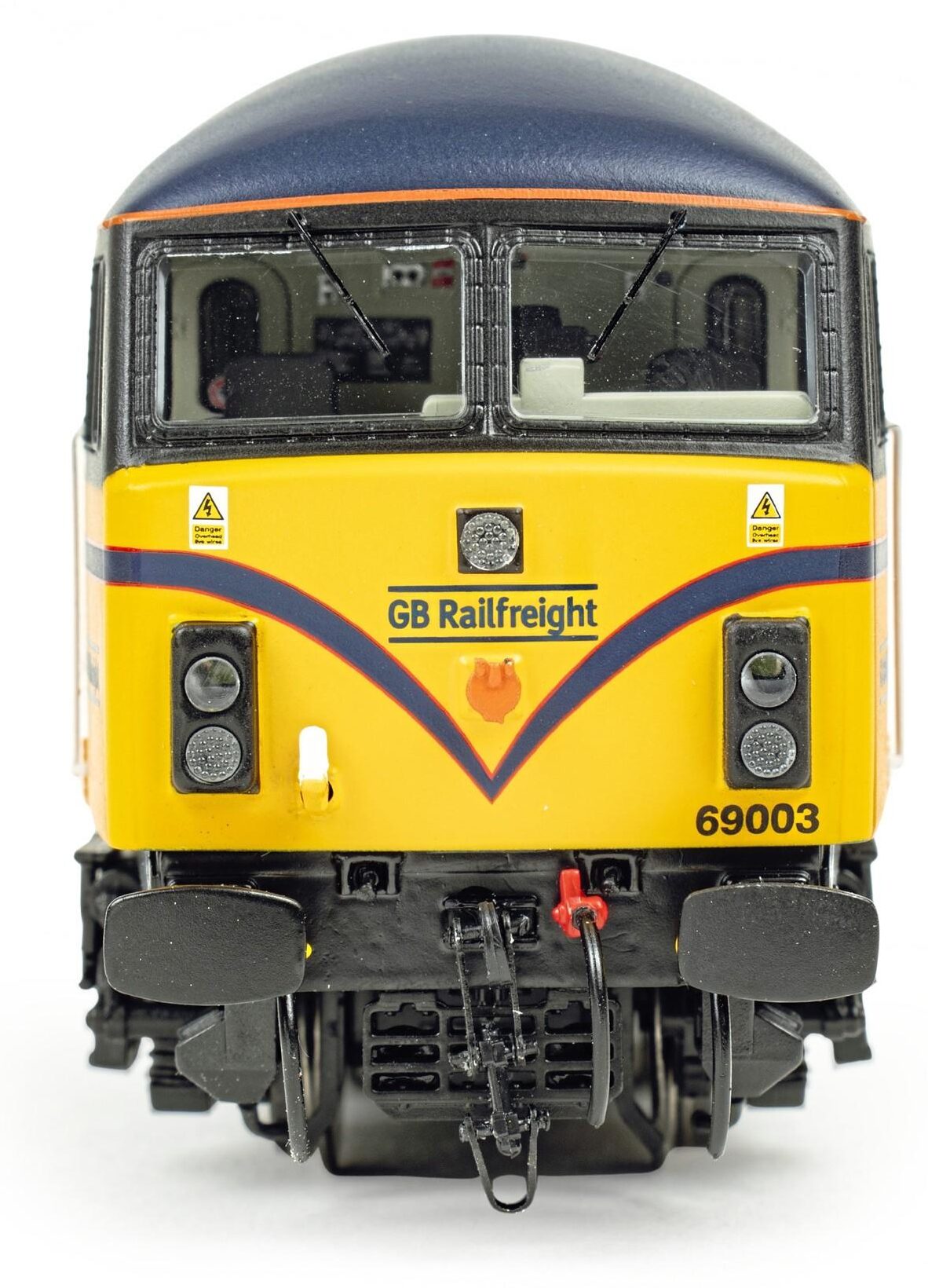
The etched bodyside grilles feature fine mesh with the distinctive internal framework visible, along with a convincing rendition of the cooling equipment inside the locomotive. The new side grille, at the exhaust end, is similarly effective. Painted wire handrails are fitted to the cab doors, and the austere cab fronts feature a nice rendition of the central multiple working sockets, plus lamp brackets and the bulky modern light clusters, all equipped with authentic lens patterns.
The underframe is a real treat for the eyes, with the unique Class 56 bogies expertly captured, with each side frame seemingly made up of many individual components. The separately applied air brake pipework adds the final touch, while the disc wheels sport a faithful profile, and the faces are neatly painted black.
Between the bogies, the new equipment surrounding the ‘56’s’ original fuel tank is all correctly rendered, again with associated pipework installed, including sanding gear.
Modern, angular buffers are installed – and lightly sprung – and the headstocks can be adorned with the supplied air brake hoses, cosmetic screw couplings, air horns and protective grilles, if dispensing with the NEM coupler pockets which are mounted on sprung cams.
Inside the cabs, the revised control desks, which are akin to those found within a Class 66, are fully detailed and painted, as are the bulkheads. All that’s missing is a driver.
3 things we like
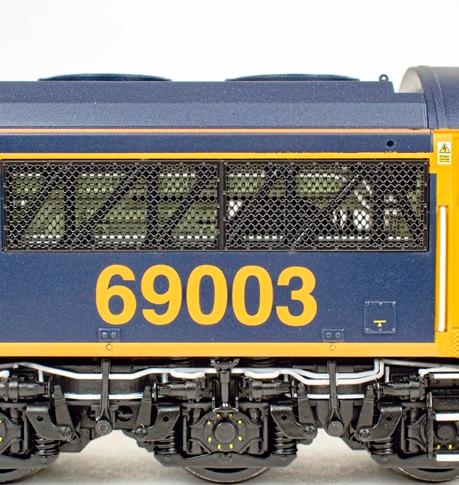
1. Internal detail and body framework visible through etched side grilles.
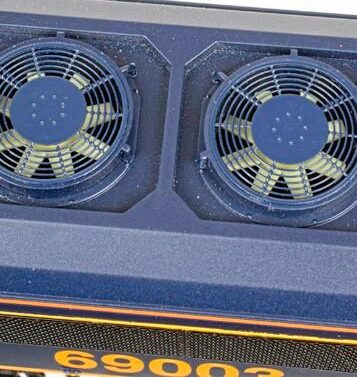
2. Cooling fans and etched grilles.
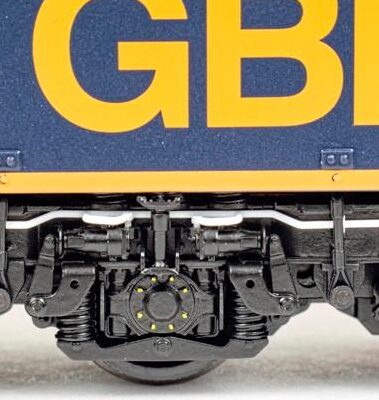
3. Bogies feature a wealth of individual detail parts.
POWER AND PERFORMANCE
Traction comes from Bachmann’s usual arrangement of a centrally mounted five-pole motor with dual flywheels and cardan shafts linked to gear towers. Power is thus transmitted to all six axles, and electrical current is collected from all wheels via wiper pick-ups.
The body is a screw-fit and, once removed, the extensive cast metal chassis block accounts for most of the model’s heft. The interior detail, visible through the side grilles, is really impressive, and the main circuit board atop the block houses a PluX22 DCC interface and a speaker at the exhaust end. Sound-fitted models come with a second speaker, mounted below the PCB.
There are a couple of mini slide switches below the chassis for analogue users to govern some of the lighting functions, but DCC operation allows for greater freedom and the chance to switch from day to night-time illumination patterns.
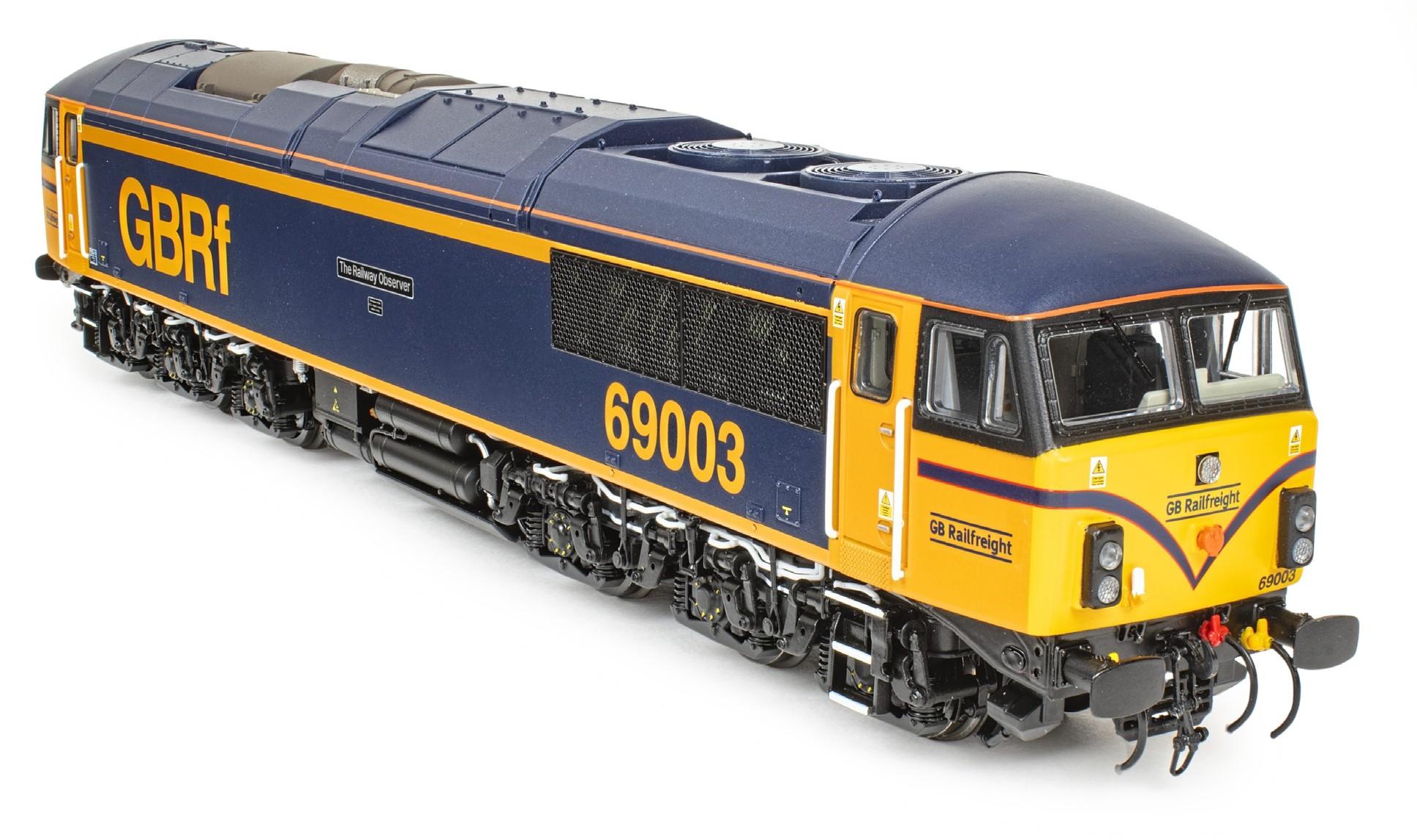
Performance proved to be first class, with the powerful mechanism producing a silky-smooth ride with minimal noise. The highly detailed bogies rotate freely and the ‘69’ hauled a substantial rake of freight wagons and coaches without any problems.
Application of the GBRf livery is also faultless, with an even finish and clean separation to each colour element. The printed logos and lined-out ‘whiskers’ are all immaculate. Also great are the printed nameplates and plaques, but even so, a set of etched replacements is also provided, if required.
With the Class 69s set to be a fixture of the real railway for many years to come, it’s gratifying to now have a top-notch replica in ‘OO’ gauge. For those working in ‘N’ gauge, let’s hope that the Farish version is not too far behind.
(GD)
Factfile: GBRf Class 69
Faced with a need for more diesel locomotives to cope with its growing business, and with further Class 66 construction impossible, GB Railfreight took the option of re-engineering a fleet of redundant British Rail Class 56s. Built originally in the late 1970s and early 1980s, the ‘56’ donors were drawn from a variety of sources and include four Romanian-built examples, with the initial aim of creating ten new Class 69s.
While the basic bodyshell, wheels, bogies and traction motors would be retained – and comprehensively overhauled – the Ruston-Paxman diesel engines would be replaced by American EMD12N-70 two-stroke engines, as fitted to the all-conquering Class 66s. Alternators and cooler group equipment also came from US locomotive designs, while an entirely new electrical system was designed and installed, and the cab interiors were re-fitted with a similar arrangement to the Class 66.
Externally, a new cooler group, roof profile and large exhaust units changed the appearance of the ‘56’ bodyshell significantly. New headlamp clusters and removal of the grilles also altered the look of the front ends.
Conversion work was carried out by US firm Progress Rail at its Longport facility near Stoke-on-Trent, while the bogie reconditioning work was contracted to Pullman Rail at Cardiff Canton. The original order was eventually expanded to create a fleet of 16 Class 69s, with the first entering traffic in 2021 and the last in autumn 2025.
Although not as widely travelled as GBRf’s Class 66 fleet, the Class 69s are usually seen south of Doncaster on the East Coast Main Line, in East Anglia and the South East, working infrastructure trains, seasonal railhead treatment trains, stock moves, and general freight.
The fleet carries a colourful mix of liveries, many based on retro British Rail schemes, in honour of the Class 56 heritage. A handful of examples carry GBRf’s usual house colours of blue and orange.
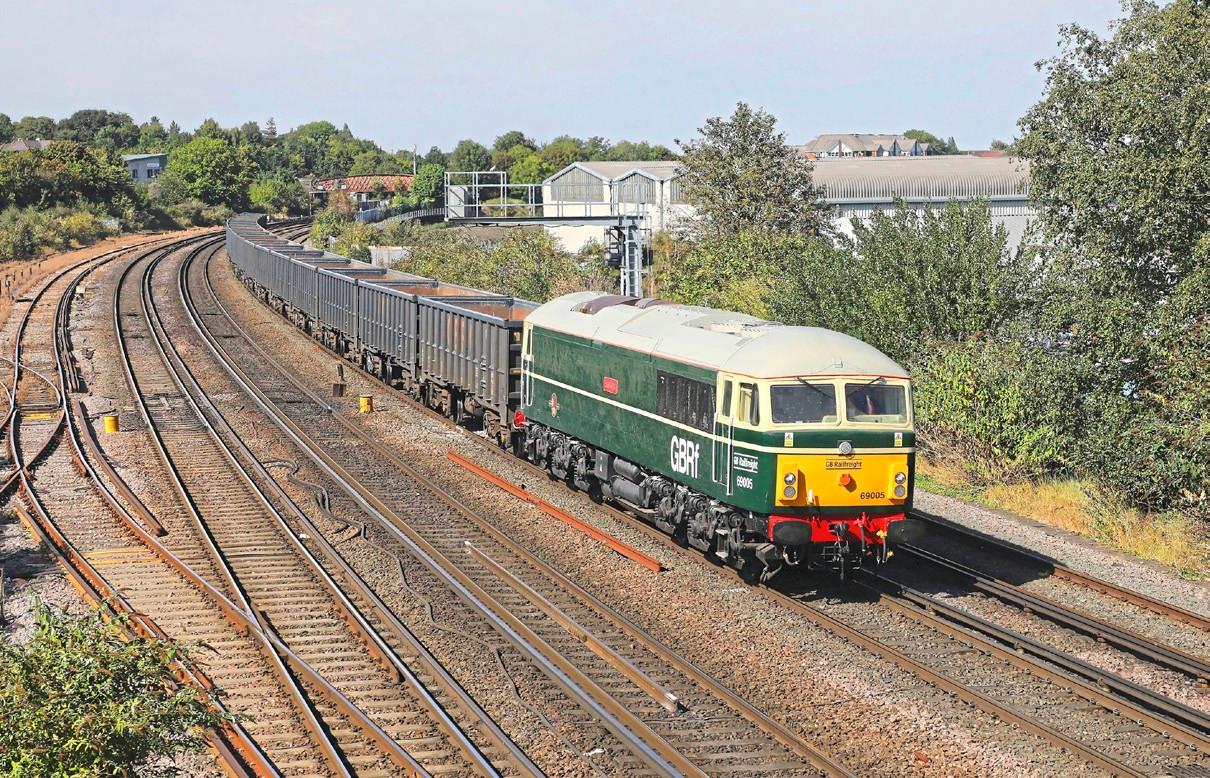 Captured at Mount Pleasant in August 2022, 69005 Eastleigh (ex-56007) looks handsome in retro-style BR green. PHIL METCALFE/RAIL
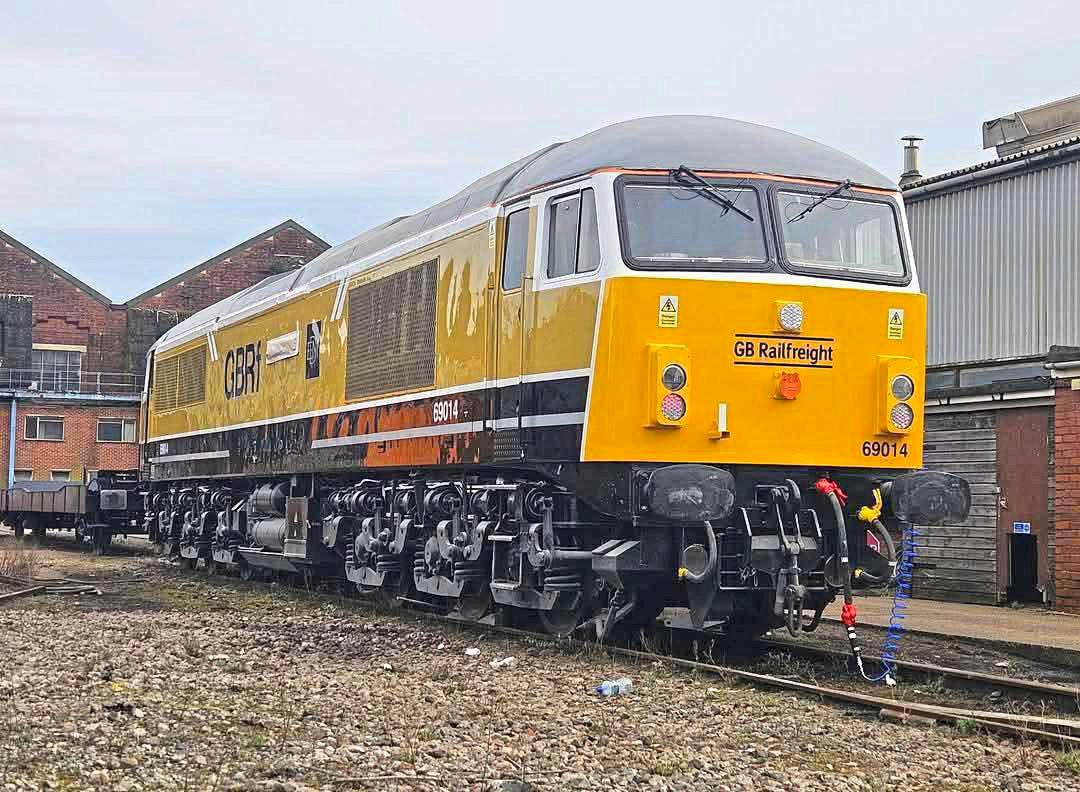 Inspired by the colour scheme of the prototype Kestrel locomotive from the 1960s, 69014 EMD Longport (ex-56104) entered traffic in March 2025. GB RAILFREIGHT
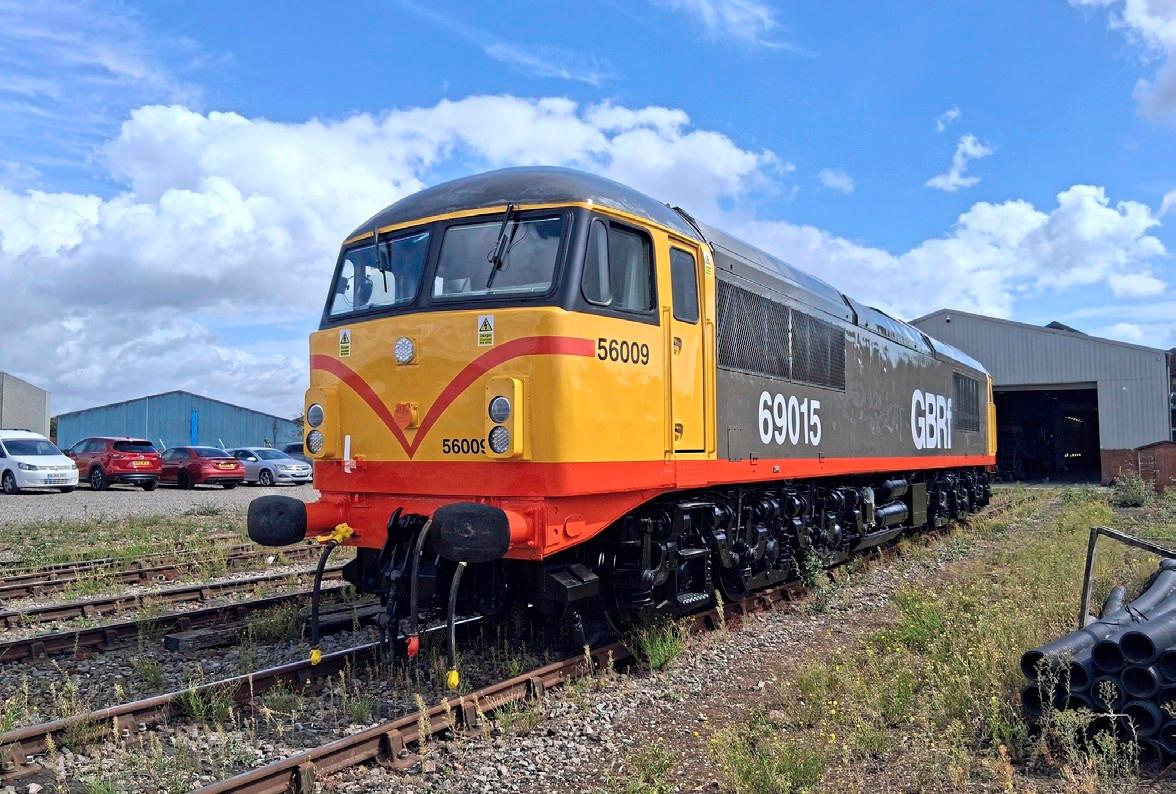 Unveiled in August 2025 in BR Railfreight ‘red stripe’ livery, 69015 is unusual in also carrying its original number of 56009. This was the final ‘69’ to enter traffic. ARLINGTON FLEET SERVICES
SUMMARY
PROS
• Looks and fidelity.
• Superb level of detail.
• Runs like a dream.
• Faultless finish.
• Ultra-popular modern prototype.
CONS
• Not a lot.
FINAL VERDICT
• Well worth the wait!

Each issue of Model Rail covers every stage of modelling, from buying your first model train set right through to museum standard fine-scale modelling. Find inspiration for your next project with our helpful tips, advice and in-depth detail on model trains and layouts.
Choose the right subscription for you and get instant digital access to the latest issue.